
Most of the guides you’ll find online about how to run an economy are absolute garbage, written by people who have never actually managed a player base larger than a handful of friends. They’ll drone on about complex mathematical models or hyper-inflationary theories that look great on a whiteboard but completely fall apart the second a single player discovers an accidental iron farm exploit. I’ve seen it happen dozens of times: a server admin implements a “perfect” tax system, only to watch their entire currency become worthless within forty-eight hours because they didn’t account for actual player behavior.
I’m not here to give you a textbook lecture or some theoretical nonsense that only works in a controlled environment. I’m going to tell you how to actually manage a living, breathing market based on what I learned while maintaining a 200-player survival server through four different version updates. I’ve built these systems from the ground up, watched them break, and fixed them in real-time. If you want the practical, tested reality of how to keep your server’s value stable without needing a PhD, you’re in the right place.
Table of Contents
Mastering Supply and Demand Dynamics Through Hands on Stress Tests
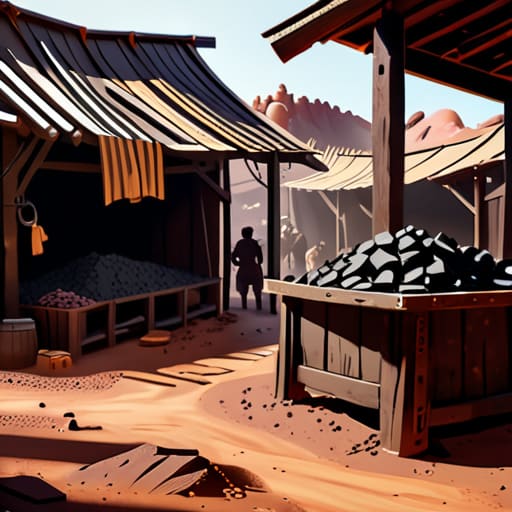
I don’t trust theoretical spreadsheets; I trust what happens when a player base realizes they’ve run out of iron. To actually understand supply and demand dynamics, you can’t just set prices and walk away. I spent a week on my last server intentionally bottlenecking the supply of end-game materials to see how quickly the local shops crashed. When I stopped the influx of ores, the price didn’t just climb—it spiked exponentially, causing a massive hoarding effect among the veteran players.
You have to treat your server like a live laboratory. I usually run “stress tests” by introducing a sudden surplus of a common item, like cooked mutton or cobblestone, to observe how the market reacts. This is how you identify your actual market equilibrium principles in real-time. If the price floor drops too fast, your players lose interest in trading, and your entire economy stagnates. I’ve learned that a stable economy isn’t about keeping prices static; it’s about predicting the volatility before the players exploit it and break your entire progression loop.
Why I Ignore Theory to Focus on Market Equilibrium Principles

Most economy guides are written by people who have never actually seen a player base crash because of a single exploit. They’ll throw around terms like monetary policy fundamentals as if they apply to a group of teenagers playing on a Saturday night. In a real server environment, theoretical models fall apart the second someone finds a way to automate diamond production. I don’t care what a textbook says about inflation; I care about what happens to my shop prices when a mob grinder becomes too efficient.
I focus on market equilibrium principles because they are the only thing that actually keeps a server from hyperinflating. If you try to implement complex fiscal policy implementation without understanding your players’ actual spending habits, you’re just setting yourself up for a wipe. I’ve seen too many admins try to act like a central bank, only to realize they don’t actually control the flow of goods. You have to watch the live data and adjust your prices based on what’s actually moving, not what a spreadsheet tells you should be happening.
Five Hard Rules for Keeping Your Server From Hyperinflating
- Stop printing money. I’ve seen admins hand out stacks of diamonds or high-tier gear just to keep players “happy” during a dry week, and all it does is kill the value of every single item on the market within forty-eight hours.
- Control the item sinks. An economy only works if there is a way for currency to leave the system; if you don’t have mechanics that force players to spend their wealth—like land claims, consumables, or repair costs—you’re just building a massive pile of useless digital dust.
- Watch the grinders, not the players. Most people look at player trades to gauge health, but I look at the automated farms. If a player builds a massive iron or gold farm, your market value for those items is about to hit zero, and you need to adjust your shop prices before the crash happens.
- Avoid the “Admin Shop” trap. If you run a central shop that sells everything at a fixed price, you aren’t running an economy; you’re running a vending machine. Real economies need price fluctuations based on what players are actually doing, not what you think they should be doing.
- Test your scarcity manually. Before you commit to a new resource being “rare,” I go into a fresh world and see how long it actually takes to mass-produce it. If I can farm it in twenty minutes, it shouldn’t be the backbone of your server’s currency.
The Bottom Line
Stop reading whitepapers on theoretical player behavior; if your economy crashes, it’s because you didn’t account for how fast a group of players can exploit a resource loop.
Real equilibrium isn’t found in a spreadsheet, it’s found by watching how much players are actually willing to pay when they’re low on supplies.
If you can’t manually simulate a market shock on your own server, you don’t actually understand how your economy works.
Final Thoughts on the Grind

At the end of the day, running an economy isn’t about memorizing a spreadsheet or following some outdated wiki guide written for a version of the game that hasn’t existed in years. It comes down to what we’ve covered: testing your supply chains under actual stress, ignoring the theoretical fluff that fails when players get creative, and watching how real people actually trade. You can’t predict player behavior from a distance; you have to watch the market react to your interventions in real-time. If you aren’t willing to break your own systems to see where the cracks are, you aren’t actually managing an economy—you’re just watching a timer run out.
Stop looking for a perfect, automated solution that requires zero maintenance. In my experience managing hundreds of players, the most stable economies are the ones that are constantly being adjusted by a hand that actually understands the underlying mechanics. Don’t be afraid to let things get messy, as long as you’re the one controlling the variables. Build it, break it, and then fix it. That is the only way to ensure your world stays functional long after the initial hype dies down.
Frequently Asked Questions
How do I stop a single player from cornering the market on a specific resource and crashing my entire economy?
You can’t stop them with rules; you stop them with infrastructure. When a player starts hoarding, they’re betting on scarcity. I’ve seen this happen on my own servers—one guy gets a stack of netherite and suddenly everyone’s broke. The fix is diversifying the supply chain. I build automated farms or public resource hubs that make their monopoly irrelevant. If the resource is too easy to crash, your economy is too fragile to begin with.
What's the best way to handle hyperinflation when players start mass-producing high-value items?
If players start mass-producing high-value items, your currency is effectively dying. I’ve seen this happen on my own servers. Don’t try to print more money; that just fuels the fire. Instead, you need to introduce “gold sinks”—mechanics that force players to spend that excess wealth back into the system. Think server-wide events, land claims, or consumable prestige items. If you can’t drain the supply, the market will collapse. Period.
Should I use a centralized shop system or let players trade freely to keep the market actually competitive?
If you go centralized, you aren’t running a market; you’re running a vending machine. I’ve seen it happen on my own servers—as soon as the admin sets the prices, the “economy” dies because players stop interacting. Use a centralized shop only for basic necessities to prevent total collapse, but let players trade freely for everything else. Real competition requires players to undercut each other, not just click a GUI.
