
I’m tired of reading those massive, twenty-minute video essays that try to frame every minor tweak as a “revolutionary shift in gameplay mechanics.” Most of those creators haven’t actually spent more than ten minutes mining in the new terrain; they just read a changelog and call it a day. If you’re looking for a deep philosophical dive into the evolution of voxel-based dimensions, go watch a YouTuber. If you actually want to know what the nether update changed regarding resource density and how much more annoying it is to navigate a Crimson Forest without getting stuck in a soul sand pocket, you’re in the right place.
I’m not going to waste your time with fluff or theories about what might happen in the next patch. I spent the last three days building out a functional outpost in a Bastion Remnant to see if the new loot tables actually justify the extra risk, and I’ve mapped out the new biome transitions myself. This is a strictly practical guide based on what I’ve actually broken and rebuilt on this version. I’ll tell you exactly what’s worth your time and what is just unnecessary noise added to the game.
Table of Contents
Navigating New Nether Biomes Guide Through Trial and Error

I spent several hours running through the Crimson and Warped forests just to see how the verticality affects movement. If you’re coming from the old, flat Nether, the new terrain is a headache. I found that the crimson forest blocks are surprisingly easy to get lost in because the color palette is so dense. I actually died twice trying to find a path back to my portal because I misjudged the depth of a ravine. My advice: don’t rely on visual landmarks alone; use coordinates or you’ll end up circling the same patch of fungus for twenty minutes.
The Soul Sand Valley was my next stop, and it’s a different kind of mess. The visibility is garbage due to the ash particles, which makes navigating the soul sand valley features like skeleton spawners a nightmare. I tried to scout for a bastion while moving through the valley, but the constant soul sand slowing effect made me a sitting duck for ghasts. If you’re planning a trek, bring plenty of fire resistance and don’t expect to move quickly. It’s not about how fast you can run; it’s about not getting stuck in a death loop.
Mastering Piglin Bartering Mechanics After Real World Testing
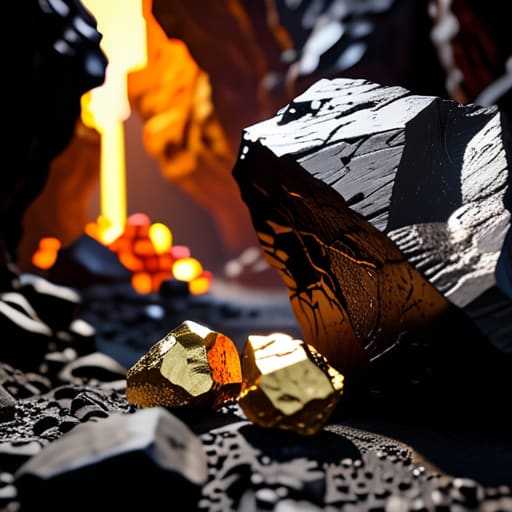
I spent a solid three hours in the Bastion yesterday just staring at Piglins to see if the drop rates actually shifted with the new terrain changes. The short answer is that the core piglin bartering mechanics haven’t fundamentally broken, but the efficiency of your grind depends entirely on how you manage your gold supply near different biome borders. I found that if you’re looting a Bastion Remnant, you can actually skip the tedious manual bartering for a while, but for long-term resource scaling, you still need a dedicated gold farm or a very efficient way to strip-mine Nether Gold Ore.
One thing I noticed while testing is that the proximity to certain structures affects how much you actually want to barter. If you’re deep in a Crimson Forest, the sheer amount of gold you can find makes the trade-off feel much faster than when you’re wandering through a Soul Sand Valley. I’ve stopped relying on luck and started setting up specific trading halls near gold-rich zones. It’s not about the RNG anymore; it’s about minimizing the travel time between your gold source and your trading pit.
5 Things I Learned While Breaking My Gear in the Nether
- Don’t bother with traditional gold armor for bartering if you’re in a crowd; I found that one wrong move near a Piglin Brute and your gold ingot won’t save you from a melee beatdown.
- Forget the old “Nether Fortress only” rule for blaze rods; I’ve spent the last three sessions mapping out the new biome transitions, and you need to be much more intentional about your movement to avoid getting stuck in a soul sand valley.
- Stop looking for Netherite in the same spots you used to; I had to re-learn the entire Y-level logic because the distribution shifted significantly with the new terrain generation.
- If you’re building in a Crimson Forest, bring extra torches—not for light, but because the new block density makes it way too easy to lose your sense of direction when you’re trying to pathfind back to your portal.
- I stopped using any fancy resource packs to “see” better in the new biomes; the vanilla lighting is actually fine once you realize how much the new fog settings mess with your depth perception in the Basalt Deltas.
The Bottom Line
Forget the old Nether survival strategies; if you aren’t prioritizing Soul Sand Valley for specific mob drops or Basalt Deltas for building materials, you’re wasting time.
Piglin bartering is no longer a random loot table—it’s a predictable mechanic that requires specific gold-to-item ratios to make sense for your progression.
Stop relying on outdated wiki guides for biome generation; the new terrain heights and structure spawns require you to actually scout the area before building a permanent base.
Final Thoughts on the New Nether

After spending dozens of hours breaking things and rebuilding them to see how the new terrain handles, the takeaway is clear: the Nether isn’t just a hallway to the End anymore. It’s a legitimate destination with its own set of rules. I’ve learned that you can’t just sprint through the Crimson Forests like you used to; you actually have to account for the biome-specific resource distribution and the sheer unpredictability of the new terrain. Between the specific bartering rates I logged with the Piglins and the way the new structures impact navigation, the update has essentially forced us to relearn the dimension from the ground up.
At the end of the day, most of the “expert” guides you’ll find online are just rehashed summaries of patch notes that haven’t been verified in-game. I don’t care what the wiki says if I haven’t personally survived a night in those biomes myself. The Nether is significantly more punishing now, but that’s exactly why it’s better. It stops being a chore and starts being a challenge. Stop reading the summaries and get into the world to see how these mechanics actually feel when you’re the one managing the chaos in real-time.
Frequently Asked Questions
Do the new biomes actually change how much quartz or netherite I can farm compared to the old terrain?
The short answer is no, the biomes don’t change the raw spawn rates, but they change the logistics. I spent a few hours strip-mining across different zones to check. Quartz distribution remains consistent regardless of the biome you’re in. Netherite is still a matter of finding Ancient Debris, and that hasn’t changed. The real difference is just the terrain density; some biomes make it a massive pain to clear space for a proper farm.
Is piglin bartering still worth the effort if I'm just looking for specific ender pearls or fire resistance potions?
If you’re chasing Ender Pearls, bartering is still the most efficient route, though it’s a grind. I’ve sat through enough failed trades to know you won’t get them every time, but the volume makes it worth it. As for Fire Resistance, you’re better off finding a Magma Cube spawner or brewing your own. I haven’t seen enough consistent potion drops from Piglins to rely on them for anything other than casual play.
Does the new terrain generation make building a base in the Nether significantly harder than it was in the old versions?
It’s harder, but not because of the blocks. In the old versions, you could just find a flat-ish basalt delta or a boring netherrack plateau and call it a day. Now, the terrain is way more vertical and chaotic. I tried setting up a base in a Soul Sand Valley, and the sheer amount of irregular terrain meant I spent more time clearing space than actually building. If you want easy, stick to the old-school plains.
