
I’ve spent enough time troubleshooting server crashes to know that when a system is failing, the last thing you need is a bloated, “optimized” script that doesn’t actually account for the hardware you’re running on. Most of the advice you find online regarding how to prepare for the end is exactly like those outdated Minecraft guides—written for a version of reality that doesn’t exist anymore, filled with fluff and theoretical nonsense that breaks the moment you try to implement it. I’m tired of seeing people get sold expensive, over-engineered “solutions” that are basically just glorified placebo effects for a problem that requires actual logic.
I’m not here to give you a philosophical lecture or a list of things I read in a textbook. My approach is much more granular: if I haven’t manually tested the workflow and seen it hold up under pressure, I’m not putting it in this guide. I am going to show you the exact, no-nonsense framework I use to secure my own logistics, stripped of all the hype and unnecessary complexity. This is a blueprint built on tested results, designed to work in the real world, not in some idealized version of it.
Table of Contents
My Tested Emergency Preparedness Checklist for Real Chaos

I don’t care about the theoretical “what-if” scenarios people post on Reddit. I care about what actually functions when the power grid goes down or a local disaster hits. I’ve built my own setup from the ground up, and my emergency preparedness checklist isn’t based on some influencer’s aesthetic camping gear. It’s about utility. I focus on high-calorie, low-prep items that don’t require a stove to consume. Most people fail because they overcomplicate their disaster readiness planning with gadgets that require charging; if it needs a USB port to work, it’s useless to me.
My current kit is stripped down to the absolute essentials. I prioritize water purification and manual tools over everything else. When I was managing my server, I learned that redundancy is the only thing that prevents a total crash, and I apply that same logic to my survival kit essentials. I don’t buy “prepper” brands. I buy heavy-duty, industrial-grade gear that I’ve personally tested in actual rain and mud. If it hasn’t survived a week of real-world stress in my hands, it doesn’t make the cut.
The Survival Kit Essentials I Actually Rely on
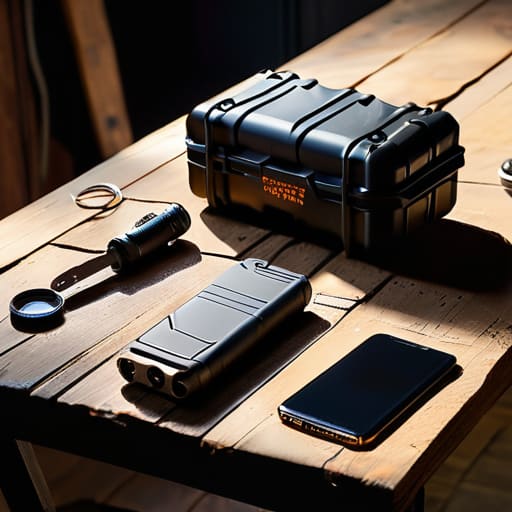
I don’t care about the fancy, color-coded kits you see in survivalist commercials. Most of that stuff is just overpriced junk that breaks the first time you actually need it. When I’m looking at my survival kit essentials, I focus on things that have a high utility-to-weight ratio. I keep a heavy-duty manual water filter and a high-output power bank that actually holds a charge after three months of sitting in a drawer. If it’s too complicated to use when your hands are shaking or the lights are out, it’s useless to me.
For my food situation, I skip the “gourmet” dehydrated meals that taste like wet cardboard. I stick to long-term stockpiling strategies involving high-calorie, shelf-stable staples that don’t require a stove to prepare. I’ve tested these setups during power outages, and the reality is that you’ll crave something more substantial than a flavored paste. My kit is built on the principle of redundancy: if one way to get heat or water fails, I need a second, simpler way that doesn’t rely on a digital interface or a specific battery type.
Five Hard Rules for When the Servers Go Down
- Stop relying on digital backups for your most critical life documents. I’ve seen enough corrupted data to know that if it isn’t physically in a waterproof, fireproof container, it doesn’t exist. Print the hard copies.
- Build your redundancy into your physical space, not just your cloud storage. If your survival plan depends on a stable Wi-Fi connection or a functioning power grid, you haven’t actually built a plan; you’ve just built a dependency.
- Test your gear in actual conditions, not just in your head. I don’t care how many “top 10” lists say a specific tool is essential; if I haven’t used it during a simulated outage or a heavy storm, I’m not including it in my setup.
- Simplify your logistics to the point of being boring. Complexity is a failure point. When things actually go sideways, you won’t have the mental bandwidth to troubleshoot a complicated system, so strip everything down to the bare essentials.
- Maintain a “zero-dependency” mindset for your immediate needs. Every item in your kit should be able to function without needing an update, a login, or a specific piece of proprietary hardware to operate.
The Bottom Line
Stop following generic guides that haven’t been updated since 2019; if you haven’t physically tested the gear in a stress scenario, it’s just dead weight in your kit.
Redundancy isn’t a suggestion, it’s the baseline—I don’t trust a single point of failure for anything I actually rely on when things go sideways.
Preparation is a continuous loop of testing and adjusting, not a “one and done” checklist you print out and forget about.
Final Implementation Notes
At the end of the day, this isn’t about hoarding random gear you saw in some curated survival video. It’s about the checklist I’ve actually run through when things went sideways, from the specific redundancy in my emergency kit to the logistical groundwork of my preparedness plan. I’ve spent enough time troubleshooting broken systems to know that if your foundation is built on untested assumptions, the whole thing will crash the moment you actually need it. Stick to the essentials I’ve laid out, keep your documentation organized, and for once, stop relying on guides that haven’t been verified in a real-world scenario.
Preparing for the end isn’t a way to live in fear; it’s a way to regain control over the variables you can actually influence. I don’t care about the theoretical “what-ifs” that people love to debate online—I care about what works when the lights go out and the systems fail. Once you have your protocols established and your kits ready, you can stop worrying about the chaos and start focusing on the actual survival. You don’t need a perfect plan, you just need a functional one that you’ve actually tested yourself.
Frequently Asked Questions
How do I manage my digital assets and server credentials if I'm not around to handle the handovers?
Don’t rely on a cloud password manager that locks you out behind 2FA if your phone dies. I keep a physical, encrypted USB drive in a fireproof safe with my master keys and server SSH configs. I’ve also set up a “dead man’s switch” via a trusted contact: if I don’t check in for a set period, they get access to a specific vault. It’s not elegant, but it actually works when things go sideways.
What's the most efficient way to organize physical survival gear so it doesn't just become a cluttered mess in a closet?
Stop thinking in terms of “storage” and start thinking in terms of “loadouts.” I don’t just throw gear in a bin; I use modular, clear-labeled dry bags inside a single heavy-duty crate. Group everything by function: medical, light, water, and power. If I can’t grab a specific kit and be out the door in under thirty seconds, the system is broken. If it’s buried under a pile of miscellaneous junk, it’s useless when things actually go sideways.
How much of my "preparedness" should be focused on immediate physical survival versus long-term logistical planning?
Look, if you’re obsessing over long-term logistics while your immediate surroundings are falling apart, you’ve already lost. I’ve seen people plan out five-year supply chains while they don’t even have a reliable way to filter water right now. Focus 80% of your energy on the next 72 hours—physical survival is the foundation. Once you aren’t actively bleeding or starving, then, and only then, do you start worrying about the paperwork and the long-term logistics.
